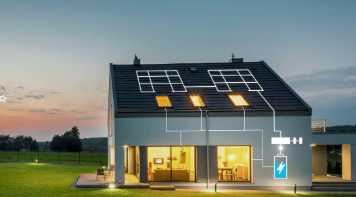
1. The Architecture of a Domestic Microgrid
The rapid electrification of transport and space heating is fundamentally altering household energy profiles. Connecting an electric vehicle (EV) charger to a standard domestic supply increases annual electrical demand substantially, creating significant cost exposure if that power is drawn directly from the grid during high-peak tariff windows. Transitioning from isolated green installations to a integrated domestic microgrid represents the most effective strategy for managing high-capacity electrical loads.
A property microgrid integrates four core components: rooftop solar PV for localized power generation, a stationary battery storage array, an intelligent smart EV charge point, and dynamic time-of-use tariff management. By coordinating generation, storage, and consumption through a centralized management layer, property owners can power both their home and vehicle using low-cost, low-carbon energy.
2. Solar Matching and EV Solar Diverters
Charging an electric vehicle using grid power during standard peak hours offsets much of the running-cost advantage of switching from fossil fuels. Integrating a solar PV array with a smart EV charger enables “solar matching,” a process where excess daytime generation is automatically diverted straight into the vehicle’s traction battery rather than exported to the national grid.
Modern smart EV chargers utilize real-time current transformers (CT clamps) installed at the main electrical meter. When daytime solar output exceeds domestic baseload consumption, the charger dynamically adjusts its charging current to match the surplus power. If solar generation drops due to cloud cover, the charger throttles back, ensuring the vehicle is fueled entirely by 100% self-generated green energy without drawing supplementary grid power.
3. Dynamic Tariffs and Bi-Directional Charging (V2X)
During winter months when solar irradiance is low, a domestic microgrid relies on time-of-use energy tariffs to maintain financial performance. By pairing stationary battery storage and EV charging schedules with dynamic overnight tariffs, property owners can charge both their stationary home batteries and vehicle batteries at ultra-low off-peak rates.
The next step in microgrid evolution is Vehicle-to-Home (V2H) and Vehicle-to-Grid (V2G) bi-directional charging. Electric vehicles store massive amounts of energy compared to standard stationary home batteries. Bi-directional chargers allow the vehicle to act as an secondary battery storage bank, feeding power back into the house during expensive peak evening hours or exporting surplus capacity to the grid during high-demand events, unlocking secondary revenue streams.
4. Government Incentives, Tax Relief, and Infrastructure Grants
Building a whole-property microgrid is supported by UK tax incentives and government grant funding designed to accelerate zero-emission transport and localized renewable generation:
- 0% VAT Rating: Solar PV arrays, stationary home battery storage units, and integrated renewable installations benefit from a 0% VAT rating across Great Britain on supply and professional fitting.
- EV Chargepoint Grant: Homeowners living in flats or rented properties can access up to £350 (or 75% of the total installation cost) toward the purchase and installation of a smart EV charge point.
- EV Infrastructure Grant for Landlords: Landlords and property managers can receive up to £850 per bay to install charge point infrastructure across multi-occupancy residential buildings.
- Smart Export Guarantee (SEG): Microgrids equipped with solar PV and export-capable battery systems can monetize any surplus power fed back into the national grid through SEG tariffs.
5. Next Steps and Partner Solutions
Designing a home microgrid requires coordinating electrical capacity, smart charger capabilities, and renewable array sizing. We partner with established installer networks, modular power manufacturers, and green energy suppliers to assist with your project:
- Integrated Solar, Battery & EV Charger Installers: Plan your home microgrid and secure certified installations for solar PV, home batteries, and smart EV chargers through Glow Green, SolarFast, and BlueApe Renewables.
- Modular Storage & Off-Grid Backup Systems: Integrate high-capacity portable power setups and modular battery banks using EcoFlow to provide resilient off-grid energy storage and backup power.
- Smart Renewable Energy Tariffs: Pair your microgrid and EV charging setup with green energy tariffs from Coop Energy to ensure your grid top-ups are matched with community-generated renewable power.
- Financial Planning & Incentive Tracking: Calculate project payback terms, evaluate EV charging running costs, and navigate available energy grants using tools from EnergySavingCash.
For further technical guidance, microgrid capacity sizing, or energy audit advice, please contact our team at info@energysaving.bio or visit https://energysaving.bio.
Disclaimer: Energy Saving Bio is a profit-oriented, knowledge-base, reader-supported resource. Some of the links on this page are affiliate links. If you click through and request a quote, purchase a system, or switch tariffs with our listed partners – such as Glow Green, EcoFlow, Coop Energy, SolarFast, EnergySavingCash, or BlueApe Renewables – we may earn a small commission at no additional cost to you. This supports our independent research and allows us to continue providing clear, unbiased energy guidance.