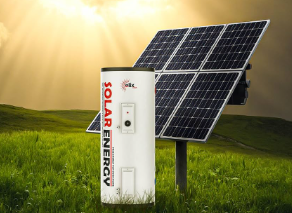
1. The Shift Toward On-Site Power Generation
Wholesale energy market volatility and rising grid distribution tariffs have made domestic and commercial power generation one of the most effective long-term strategies for cost control. Moving away from total grid dependence toward on-site generation allows property owners to lock in predictable energy costs while substantially reducing their carbon footprint.
Solar photovoltaic (PV) panels represent the foundational layer of this transition. By capturing solar irradiance and converting it into direct current electricity, a rooftop array generates clean power directly at the point of use. However, daytime generation rarely aligns perfectly with peak household or business demand, which is why modern installations couple solar generation with on-site battery storage to achieve true energy flexibility.
2. Solar PV and Battery Storage Integration
A standard solar installation without battery storage forces surplus daytime power back onto the national grid, often for minimal financial return. When evening arrives and electricity demand spikes, the property must buy back electricity from the grid at full retail prices. Battery storage solves this imbalance by capturing daytime generation and storing it for use during peak hours.
Modern lithium-iron-phosphate (LFP) battery systems provide exceptional thermal stability, long cycle lives, and high depth of discharge. When managed by smart hybrid inverters, these systems continuously optimize energy flows across the property. They prioritize powering live domestic loads, directing any excess to charge the battery bank, and only exporting to the grid once storage capacities are fully satisfied.
For maximum flexibility, smart storage systems can also be integrated with dynamic, time-of-use energy tariffs. During winter months when solar irradiance is low, the battery can automatically charge from the grid overnight during cheap off-peak hours and discharge during expensive daytime windows, ensuring continuous bill reduction throughout the year.
3. Financial Incentives, 0% VAT, and Government Grants
The financial viability of on-site renewables has improved significantly due to targeted tax relief and government grant schemes across the UK. Energy efficiency hardware, including solar PV panels and stationary battery storage systems, currently benefits from a 0% VAT rating on supply and installation. This tax relief applies to standalone battery installations as well as combined solar-and-battery systems, instantly reducing upfront capital outlay.
For low-income households, off-grid properties, or buildings with low Energy Performance Certificate (EPC) ratings, additional funding routes exist to subsidise or fully cover installation costs. The ECO4 scheme and the Warm Homes Local Grant provide targeted funding for thermal and electrical upgrades, while schemes like the Warm Homes Plan offer low-interest financing to help homeowners spread the cost of renewable installations.
Beyond upfront capital savings, system owners can monetize their export capacity through the Smart Export Guarantee (SEG). By enrolling in an optimal SEG tariff, property owners receive payments for every kilowatt-hour of clean power fed back into the national grid, shortening the overall payback period of the installation.
4. Electrifying Heat and Transport: The Whole-Property Microgrid
Solar PV arrays and battery storage systems act as the primary engine for broader property electrification. When paired with an air source heat pump, an electric vehicle (EV) charger, or a thermal storage buffer, an on-site generation array transforms a property into a near net-zero microgrid.
Smart EV chargers can be set to eco mode, diverting excess solar generation straight into an electric vehicle rather than exporting it. Similarly, heat pumps can be programmed to run during peak solar generation windows or cheap overnight battery windows, pre-heating hot water cylinders and underfloor heating loops. This integrated approach minimizes grid reliance across heating, power, and transport simultaneously.
5. Next Steps and Partner Solutions
Selecting the right hardware, installation setup, and supporting energy tariff are critical steps toward achieving maximum energy autonomy and rapid system payback. We work alongside trusted renewable specialists, system manufacturers, and green energy providers to help you seamlessly transition to clean, self-generated power.
- Turnkey Renewables & Turnkey Solar: Explore complete domestic solar PV and home energy solutions with Glow Green, SolarFast, and BlueApe Renewables to get tailored system specifications and design proposals for your property.
- Portable Power & Battery Solutions: Discover modular battery storage, portable power stations, and flexible solar storage setups through EcoFlow for targeted backup power or expandable off-grid capacity.
- Community & Green Energy Tariffs: Pair your solar and battery setup with renewable energy tariffs through Coop Energy to ensure your grid top-ups and energy management align with ethical green energy standards.
- Funding & Cash-Back Guidance: Maximize your return on investment, navigate available efficiency incentives, and manage your overall project budget with financial planning insights from EnergySavingCash.
For further technical inquiries, system sizing advice, or energy audit guidance, please contact our team at info@energysaving.bio or visit https://energysaving.bio
Disclaimer: Energy Saving Bio is profit-oriented, knowledge-base, reader-supported resource. Some of the links on this page are affiliate links. If you click through and request a quote, purchase a system, or switch tariffs with our listed partners – such as Glow Green, EcoFlow, Coop Energy, SolarFast, EnergySavingCash, or BlueApe Renewables – we may earn a small commission at no additional cost to you. This supports our independent research and allows us to continue providing clear, unbiased energy guidance.